article · Materials, understood
Paver materials: choose for the actual use
A comparison framework for concrete, clay, porcelain, natural stone, and sintered slab options, organized around use, climate, finish, and maintenance.
Start with use and traffic
A driveway, a front walk, a pool surround, and a covered outdoor kitchen counter put very different demands on a surface. Driveways and service areas usually need the most attention to base thickness, compaction, and edge restraint because loads and turning forces are concentrated. Walkways and patios can often use lighter systems but still depend on drainage and restraint. Pool surrounds add slip expectations, barefoot comfort, and water exposure to the list.
Write down who and what will use the surface, how often, and in what weather. A material that suits a lightly used courtyard may be a poor fit for a driveway that carries delivery trucks, and a finish chosen for a shaded path may behave differently in full afternoon sun. These are not material verdicts; they are inputs the installer and supplier need in order to recommend a system.
Compare the material families honestly
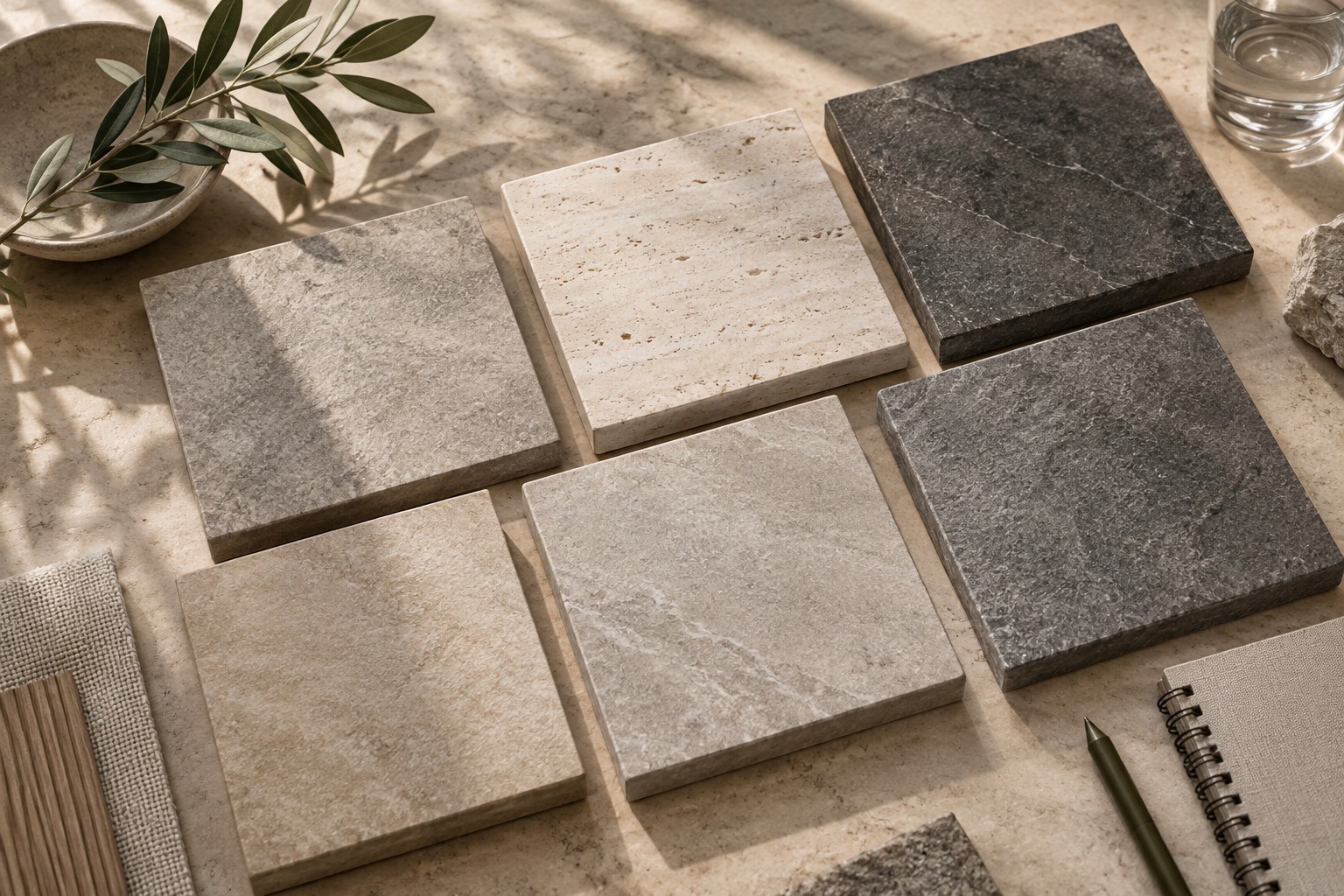
Concrete pavers offer dimensional consistency and a wide range of colors and textures, and individual units can often be lifted and reset if the base is sound. Clay pavers bring a fired, through-body color and a traditional scale. Natural stone brings variation that many people value and that also makes every piece unique. Sintered stone slabs are manufactured slabs used for cladding, countertops, and large exterior surfaces.
The honest comparison is not which family is best but which family's characteristics match the project's priorities. Uniformity, variation, repairability, weight, cutting, and available thicknesses differ within each family, not just between families. Two porcelain products from different lines can behave differently, so the comparison belongs at the product level, using the datasheet.
Finish, texture, and slip expectations
Finish drives how a surface looks wet or dry, how it reflects light, how it feels underfoot, and how it retains or shows marks. Honed, textured, brushed, and structured finishes are used across exterior products, and the same stone name in two finishes can feel like two different materials. For pool decks and steps, texture and drainage matter more than a glossy look.
Slip performance is a system property, not a marketing phrase. It depends on the finish, the water present, the sole or tire, and the slope. Ask the supplier for the manufacturer's published slip-related documentation for the exact finish and ask the installer how slope and drainage will move water away from walking surfaces. Do not treat a visual texture as a guaranteed slip rating.
Climate and freeze-thaw exposure
In freezing climates, water that enters a paver, joint, or base and then freezes can damage surfaces and shift units. The local frost depth, soil drainage, and the choice of setting method all interact with the material. Manufactured products vary in how they are rated for exterior freeze-thaw conditions, and natural stone varies by type and finish.
Rather than assuming a category is safe, ask for the manufacturer's current exterior suitability statement for the specific product and follow the specified setting system. Also ask how the design sheds water and whether any part of the surface will hold it. In cold regions, drainage and restraint deserve as much attention as the visible surface.
Separate pedestrian and vehicle use
The TCNA explanation establishes what the porcelain label means; it does not establish a traffic rating. MSI’s Arterra manual distinguishes pedestrian sand-set work from its mortar-set vehicle application. Use those as examples of why material identity and assembly approval are separate. For a driveway, request an explicit load and installation statement for the exact product instead of borrowing a patio detail.
A relevant supplier reference
NT Pavers lists multiple porcelain formats and patterns in its public catalog. Use that selection range to build a shortlist, then request the exact application documents before treating any format as approved for the project.
Sources
- Porcelain versus non-porcelain tile Tile Council of North America
- Arterra porcelain pavers professional installation manual MSI
- NT Pavers porcelain paver catalog NT Pavers