article · Installation decisions
Sand, mortar or pedestals: choose a paver system
Common exterior installation approaches, from sand-set and open-graded systems to mortar, adhesive, and pedestal systems, and the restraint each requires.
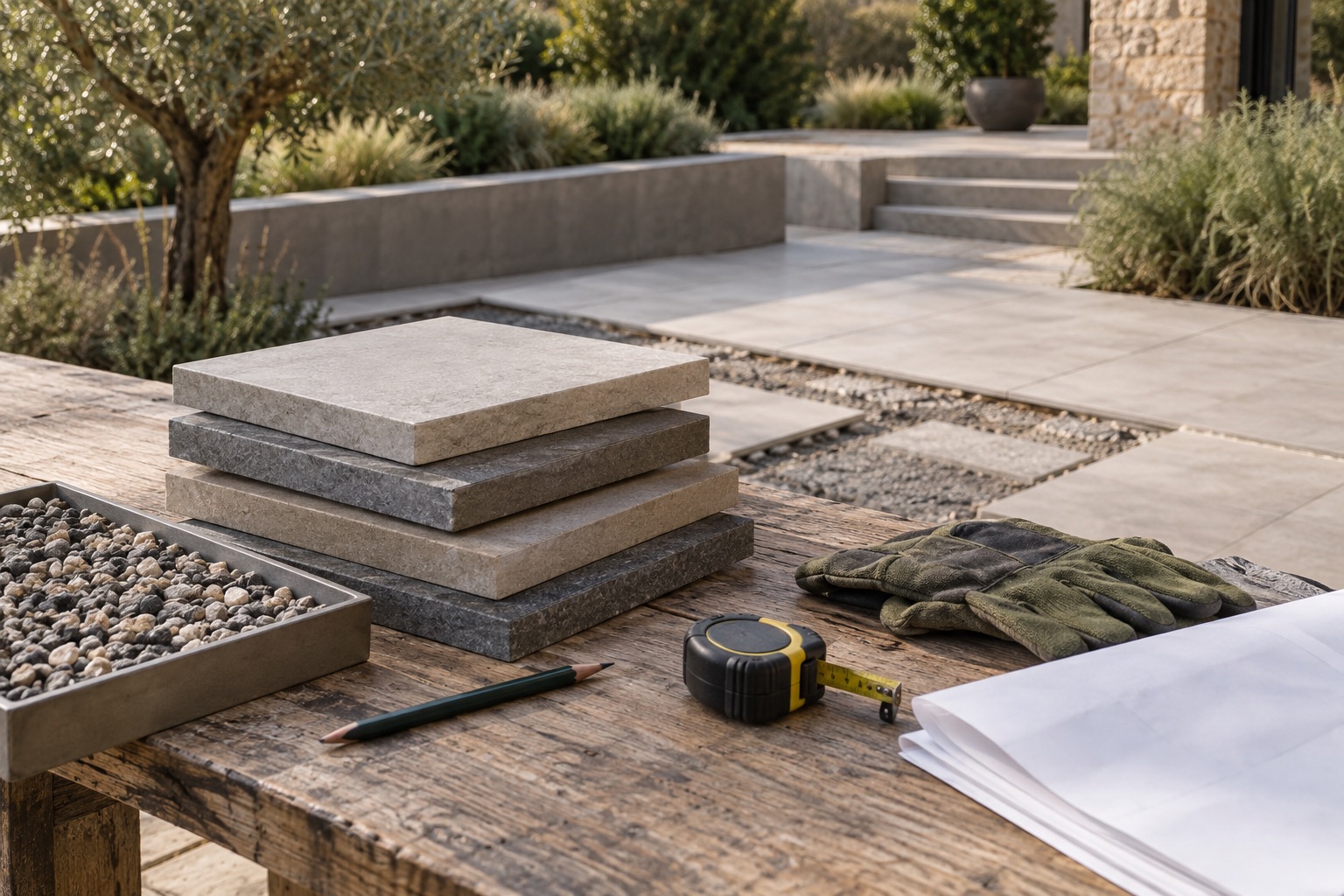
Method follows material and base
There is no single correct way to install exterior pavers and slabs. The setting method is a system decision that combines the product's thickness and requirements, the base, the climate, the intended loads, and the manufacturer's instructions. A method that is standard in one region may be unusual in another, and a method that suits a garden path may be unsuitable for a driveway or a roof deck.
Ask the installer to describe the full assembly from soil to surface, not just the top layer. The description should name the base, bedding, setting material, joint material, and edge restraint, and should explain how each choice follows from the product and site.
Sand-set and open-graded systems
Sand-set systems place units on a compacted granular base with a bedding layer and fill the joints with sand or a stabilizing material. Open-graded systems use a free-draining base and open or permeable joints so water passes through the surface. These approaches are common for pedestrian and residential applications and are generally forgiving of minor movement because individual units can be reset.
Ask whether the selected product is approved for sand-set or open-graded installation, what base and bedding materials are specified, and what joint material is required. Ask how the system handles freeze-thaw and how it should be maintained. Do not assume that a product designed for adhered installation will perform the same way when loose-laid.
Mortar and adhesive systems
Mortared and adhered systems bond units or slabs to a prepared concrete or approved substrate. They are used where a continuous, restrained surface is wanted or where loose-laid systems are not appropriate. These systems demand a sound, correctly sloped substrate, correct surface preparation, appropriate adhesives and mortars for the material, and careful detailing at joints and edges.
Ask how the substrate will be prepared and checked, what setting materials the manufacturer requires, and how movement joints and perimeter joints will be handled. Adhered installations have less tolerance for substrate movement, so cracks and control joints must be addressed by design, not covered over.
Pedestal and raised systems
Pedestal systems support pavers or slabs above a structural deck or waterproofed surface, creating a void for drainage and services. They allow individual units to be lifted for access and avoid bonding the surface to the waterproofing. They are common on balconies, terraces, and roof decks where drainage and membrane protection are priorities.
Ask whether the selected product and thickness are approved for pedestal support, how the pedestals transfer load to the structure, how the surface is restrained against wind uplift, and how the void drains. Ask how the waterproofing is protected and inspected, and who is responsible for that layer. Pedestal work sits close to waterproofing and structural trades, so coordination matters.
Edge restraint and jointing
The approved system should define how exposed edges are supported or restrained and how joints function. Joint width, joint fill, and edge restraint work together to keep the surface stable and to let water drain as intended. Tight joints, missing restraint, or the wrong fill can undo an otherwise correct installation.
Weather and cure scheduling
Ask what the manufacturer requires for cold or hot conditions and whether any materials need special handling. Building weather contingencies into the schedule is far cheaper than repairing an installation that set under the wrong conditions.
Do not interchange approved methods
MSI publishes separate Arterra sand-set, mortar and pedestal guidance. These are application-specific instructions rather than permission to assemble a hybrid from whichever products are available. Ask the supplier to identify the relevant current detail and its limitations. Keep a written answer for unusual support conditions. Where the substrate is structural or elevated, the project also needs the appropriate design review; a paver thickness by itself cannot establish capacity.
Loading this media contacts www.youtube-nocookie.com. It does not load until you choose to continue.