article · Materials, understood
Read a surface datasheet before choosing the finish
Separate material identity, application approval and installation requirements when comparing technical documents.
Begin with the exact identifier
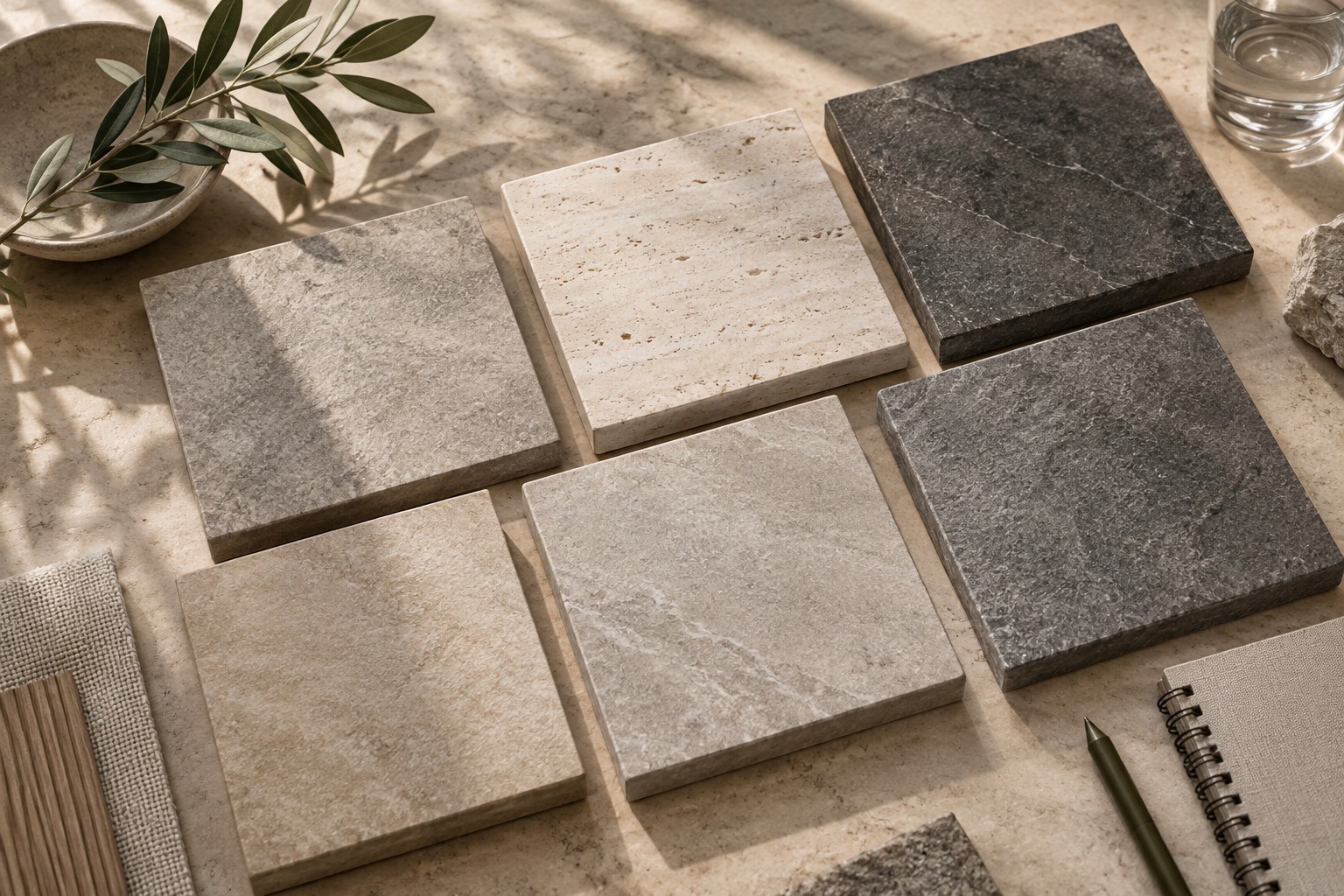
A useful technical comparison starts with an exact product, finish, format and document date. Save those identifiers beside the sample photograph. Similar names can conceal a different thickness or surface treatment, and a brochure may describe a product family rather than the piece being ordered. Ask the supplier which document applies to the proposed purchase. If the answer is uncertain, leave the selection unresolved instead of treating the closest available PDF as approval.
Identify what the test establishes
TCNA defines porcelain by a water-absorption test and explains that other tile can also have approved exterior applications. The porcelain label therefore answers a material-classification question; it does not, by itself, approve a driveway, wet deck or rooftop. Write down the test method beside any result and ask whether it applies to the exact finish and use. Do not compare numbers from different methods as if they were the same measurement.
Read the application and assembly together
A resource library such as MSI’s separates installation instructions, maintenance, warranties and slip-related documents. Open the relevant records instead of stopping at the marketing description. Application suitability is only one layer: the chosen support, joints, edge details and environmental conditions also need to fit. On the selection sheet, create separate fields for intended use and approved installation. A missing installation detail is a question for the manufacturer, not a blank to fill from a different product.
Turn the comparison into a decision
Record the conditions that would rule a candidate out, then the qualities that would distinguish the remaining options. Those might include permitted exterior exposure, support method, finish, fabrication access or an acceptable maintenance routine. Keep unknowns visible. This method makes an honest incomplete comparison more useful than an impressive table of unsupported numbers. When documents disagree, send the exact references to the supplier and request a written clarification before purchase.
Preserve the record
Keep the final document set with the order and sample approval. If a substitution arrives, compare its identifier and technical records before installation; the original acceptance does not automatically transfer. Save the answer to any clarification along with the drawing or quotation it changed. The goal is a short traceable record that explains why the actual product was selected, so a later maintenance or repair question can start from evidence rather than a remembered sales conversation.
Sources
- Porcelain versus non-porcelain tile Tile Council of North America
- Arterra installation, maintenance, warranty and test documents MSI