article · Installation decisions
Pool deck installation: coordinate separate assemblies
Setting systems used around pools, from loose-laid and adhered installations to pedestal support, and the requirements of each.
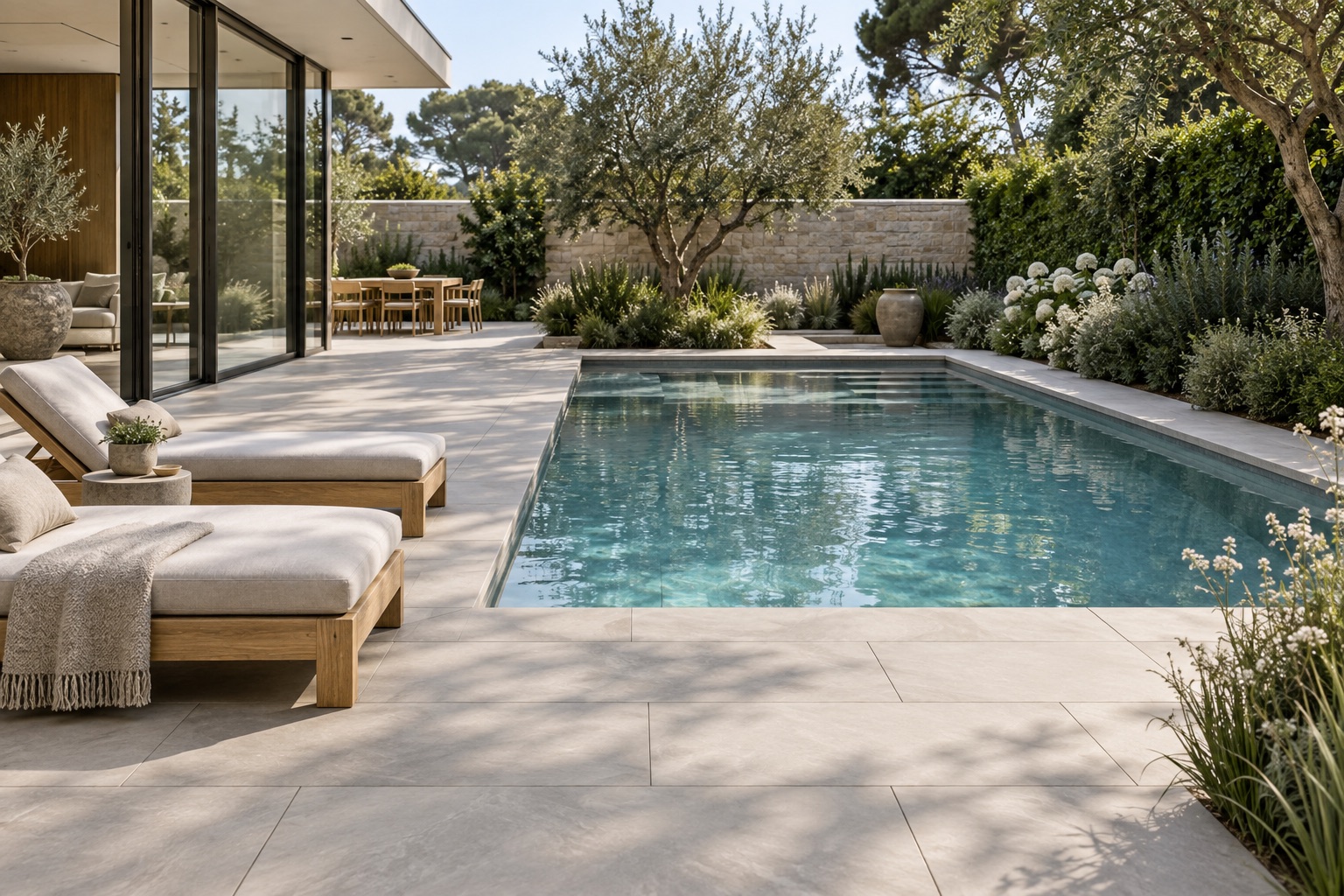
The support defines the method
Pool decks are built on grade, on a structural slab, or over a waterproofed structure, and the support determines which installation methods are possible. On grade, a compacted base with a loose-laid or adhered surface is common. On a structural slab, the slab condition, slope, and movement joints shape the approach. Over a waterproofed structure, protecting the membrane while allowing drainage often leads to a pedestal system.
Ask which support the deck uses and which methods are approved for the selected product on that support. The method should follow from the product datasheet and the site conditions, not from habit or from what is easiest on the day.
Loose-laid and open-joint systems
Loose-laid systems on a prepared base allow individual units to be reset and can drain through open joints into a free-draining base. Around a pool, these systems must be designed so that water and pool splash drain reliably and so that the base is not undermined. Joint fill, edge restraint, and the filter layer all matter.
Ask whether the product is approved for loose-laid installation around a pool, what base and bedding are specified, and how joints are filled. Ask how the system handles freeze-thaw and how the drainage path is kept clear. Around water, a system that relies on drainage must be maintained so that it keeps draining.
Adhered and mortared systems
Adhered systems bond units to a concrete or approved substrate, giving a continuous, restrained surface. They require a sound, correctly sloped substrate, appropriate materials, and careful joint detailing. Around a pool, these systems must handle constant water exposure and movement between the deck, coping, and shell. Adhered decks have less tolerance for substrate cracks and movement.
Ask how the substrate will be prepared and checked, what setting materials are specified, and how movement joints and perimeter isolation are handled. Ask how the system drains and how water is kept from getting beneath the surface. Manufacturer instructions for wet areas govern the choice of materials.
Pedestal and raised systems
Pedestal systems support units above a structural or waterproofed surface, creating a drained void. They protect waterproofing, allow access for maintenance, and can be used where a bonded surface is undesirable. Around pools and on elevated decks, they are often chosen precisely because the waterproofing must remain intact and inspectable.
Ask whether the product and thickness are approved for pedestal support, how loads transfer to the structure, how the surface is restrained against uplift, and how the void drains and is cleaned. Ask how the waterproofing below is installed, tested, and protected, and who is responsible for it. Pedestal decks depend on coordination among the waterproofing, structural, and surface trades.
Joints around water
Joints in a pool deck are not just aesthetic. They let the surface move, drain water, and isolate different structures. Joint width and fill should follow the manufacturer's requirements and the system design. Rigidly filling a joint that needs to move, or leaving a joint that should be sealed, both cause problems.
Verify the paver and pool interface
MSI’s paver manual shows that installation depends on the selected support method and intended traffic. A pool deck adds an interface with coping, the pool structure and drainage that the paver detail alone cannot resolve. Ask the pool designer and paver installer to approve the same transition drawing. Keep the joint and support requirements visible on that drawing rather than letting the crews infer them from adjacent work.