article · Trade coordination
Submittals and samples: keep selection changes traceable
How to document product selections, approve finishes, and control substitutions across exterior and interior surface scopes.
Build a selection record
A selection record lists each product by manufacturer, line, color, finish, size, and intended location, with the current datasheet and care guide attached. It becomes the reference for ordering, installation, and future repair. On multi-surface projects, it also shows how exterior and interior materials relate at transitions.
Keep the record in one place and update it when selections change. A spreadsheet or a shared document is enough, as long as it is accessible to the trades and the client. Undocumented verbal selections make wrong-product deliveries harder to prevent and resolve.
Approve physical samples
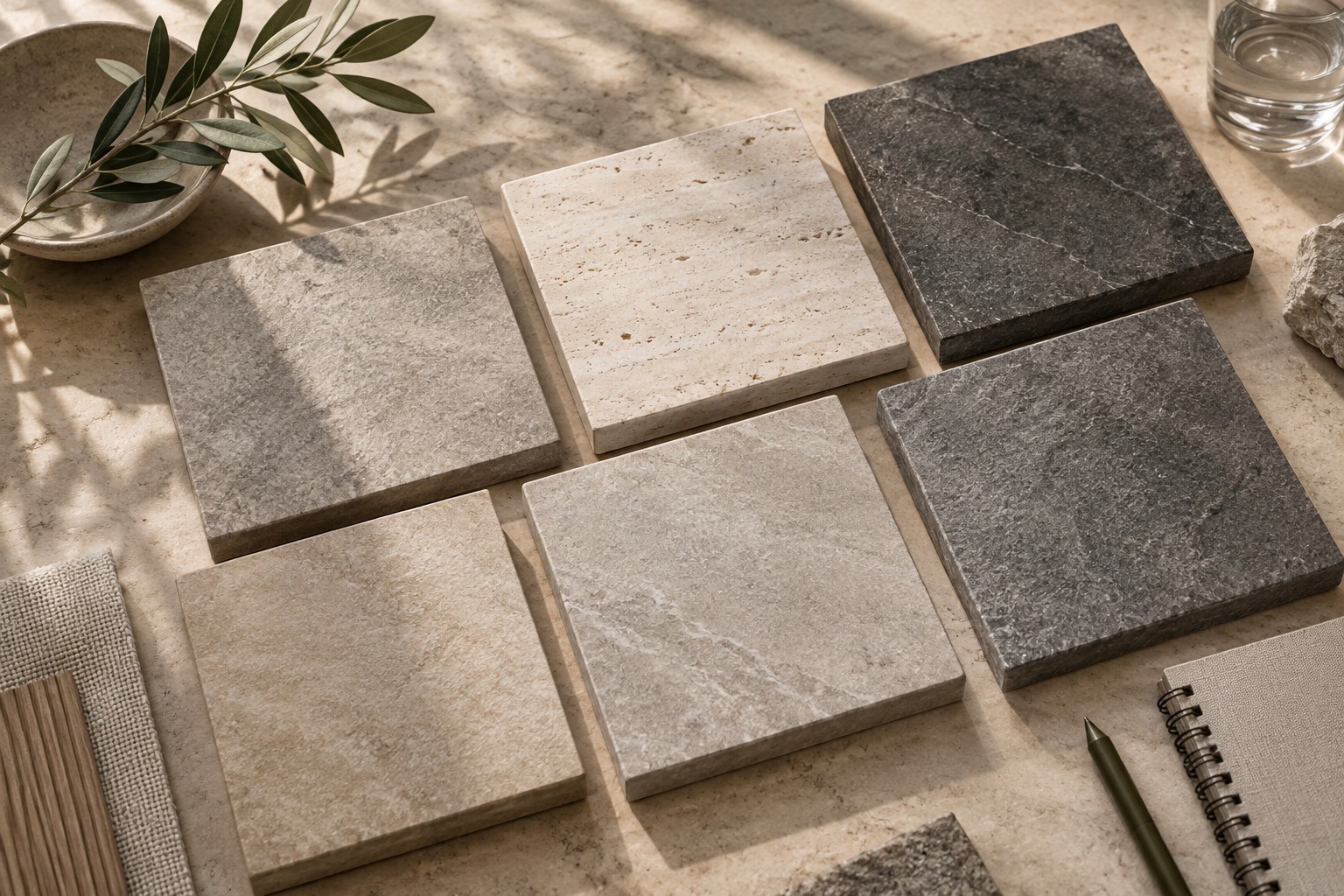
Digital images and showroom lighting misrepresent color and texture. Approve physical samples of the actual product and finish, and view them in the lighting conditions where they will be installed. For natural stone, approve a range rather than a single piece, because variation is inherent. For manufactured products, confirm the current batch and note dye-lot or caliber considerations.
Where a pattern or layout is important, ask for a dry-laid sample or a layout drawing. Seeing the pattern at full scale catches proportion problems that a small sample cannot. Have the client sign off on the sample reference so there is a shared record of what was approved.
Control substitutions
Substitutions happen when a product is discontinued, out of stock, or delayed. Without a process, a substitute can be installed that does not match the approved color, finish, or performance. Define in advance who may approve a substitution, what evidence is required, and how the client will be informed.
When a substitution is proposed, compare it against the selection record on all attributes, not just appearance: thickness, finish, setting requirements, care, and availability. Document the approval. A substitution approved in writing protects the contractor and keeps the client's expectations aligned.
Coordinate transitions early
Transitions between materials are where selections meet. An exterior paver meeting an interior floor at a door, a countertop meeting a backsplash, or a pool coping meeting a deck all need a planned detail: height difference, joint type, material compatibility, and who installs it. These details should be drawn and approved before either material is ordered.
Ask the designer or responsible party to detail each transition and include it in the submittal package. A transition that is left to the field is often solved with a visible patch or a trip hazard. Resolving it on paper costs nothing by comparison.
Record the client approvals
Keep dated records of every approval: samples, layouts, substitutions, and change orders. Store them with the selection record and reference them in the schedule. When a client later questions a color or pattern, the approval record answers the question objectively.
A concise approval log also helps at closeout, when care instructions and spare material are handed over. The client receives a coherent package that documents what was installed and why, which supports both satisfaction and future service.
Approve both a sample and the documents
MSI’s paver resource library and Crossville’s application resources separate visual selection from technical guidance. A signed color sample does not approve a different thickness or installation method. Pair the sample with the exact product identifier and current documents. When a substitution is proposed, compare each changed attribute and state who accepts it. Keep the replaced selection in the record so the purchasing and installation teams can see which approval is current.
A named supplier reference
NT Pavers lists its showroom at 99 Ethel Avenue in Hawthorne, New Jersey. The optional map below locates that supplier; contact the supplier directly to confirm current hours and the products you want to see before visiting.
Loading this media contacts www.google.com. It does not load until you choose to continue.