article · A better project plan
Project discovery: record the conditions before choosing surfaces
The intake questions that surface site conditions, use, and constraints before exterior and interior surfaces are selected.
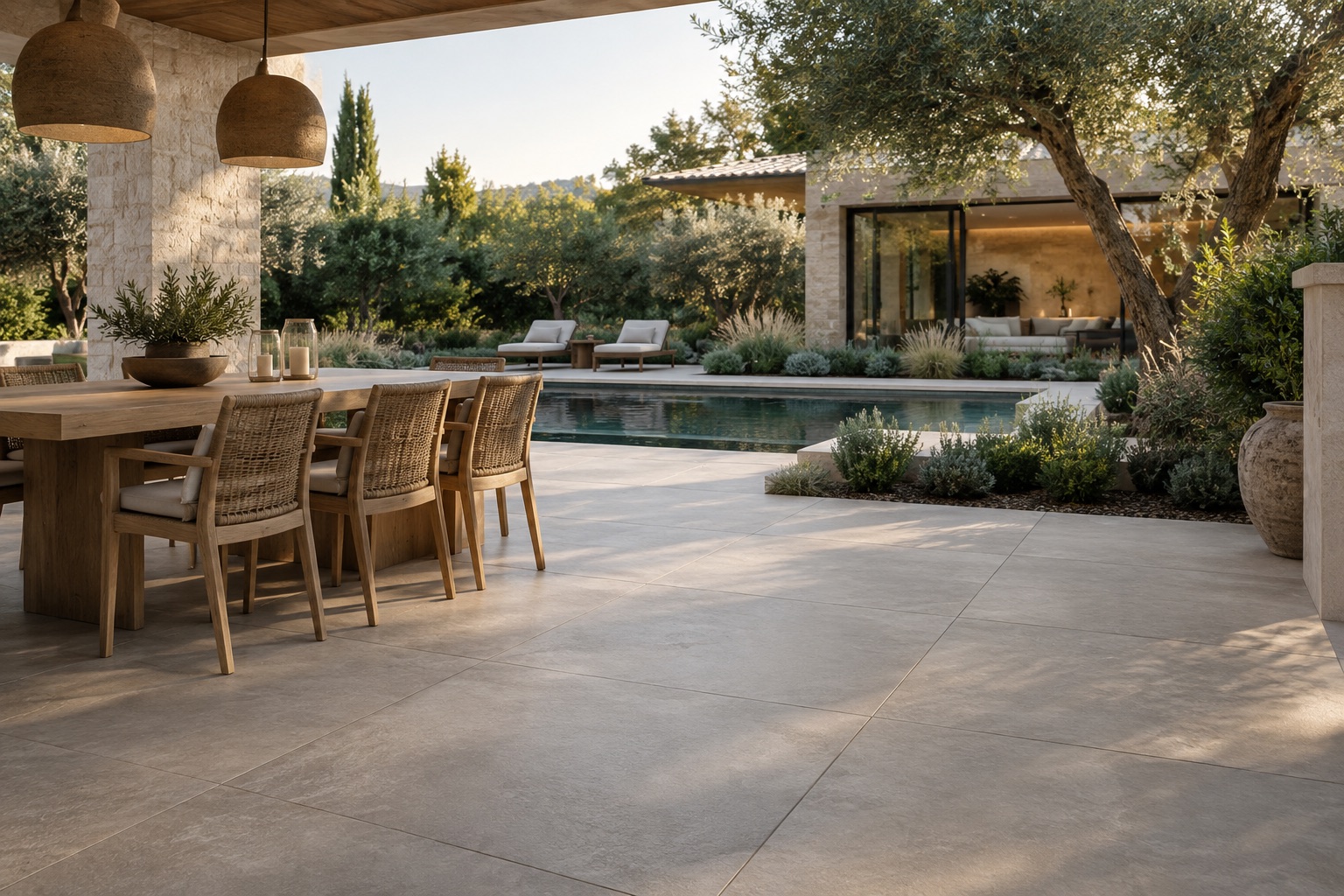
Start with use, not product
Before anyone opens a sample book, establish how each surface will be used. For exterior work, ask about vehicle loads, foot traffic, pool or water exposure, freeze-thaw climate, and maintenance expectations. For interior work, ask about wet areas, heat sources, pets and children, cleaning habits, and whether the floor continues to an exterior door. For an outdoor kitchen, ask about the appliances, the cooking style, and the countertop activities.
These answers narrow the product field and reveal the installation systems that are feasible. They also expose mismatches early, such as a client who wants a low-maintenance surface but gravitates toward a material that requires sealing. Discovery is cheaper than change orders.
Document the site and constraints
Collect the conditions that will govern the work: existing base or slab, drainage patterns, grade, frost depth, structural elements, door thresholds, ceiling heights, substrate condition, and utility locations. For interiors, note floor flatness, existing deflection or cracks, and transitions to adjacent materials. For exteriors, note where water goes and how it will keep going there.
Photograph and measure rather than relying on memory. On multi-surface projects, a shared set of dimensions and elevations helps the trades identify conflicting assumptions. Where a dimension is uncertain, mark it for field verification instead of guessing.
Establish the budget and responsibility frame
Ask how the client expects to make decisions and who approves samples and changes. Clarify which party supplies materials, which party supplies setting and finishing products, and which party holds the warranty for each layer. In multi-surface projects, responsibility for transitions, sealants, and interfaces is a frequent gap.
A simple responsibility matrix, even a handwritten one, makes scope gaps easier to identify. It should cover excavation, base, waterproofing, setting, jointing, sealants, countertop support, and final cleaning. When everyone knows what they own, the project runs faster and defects are easier to assign.
Set the decision calendar
Surface selections have lead times and inspection points. Identify the dates by which products must be selected, samples approved, and materials ordered so that the schedule is not driven by the longest lead item discovered late. For interiors, tile and slab layouts should be settled before rough-in is closed. For exteriors, base and drainage must be designed before excavation finishes.
Publish the decision calendar to the client and the trades. A shared calendar turns vague 'we'll decide later' into dates that protect the schedule. It also creates room for a second sample round if the first is rejected.
Identify what the client values
Clients often care about a few things intensely and are flexible about the rest: a particular look, a low-maintenance lifestyle, a budget ceiling, or a durable surface for a busy household. Asking which priority matters most helps the team evaluate tradeoffs consistently. A client who values uniformity may prefer porcelain; one who values geologic character may prefer natural stone.
Record the priorities and refer back to them when tradeoffs arise. A decision framework agreed at intake makes later choices faster and less contentious, because the criteria are already on the table.
Create a decision record before the quote
The FTC contractor guide supports asking about similar work and permitting. MSI’s resource library demonstrates the product documents needed after the intended application is clear. Build the project record in that order: use, site conditions, feasible assembly, then product selection. Mark unknown dimensions and approvals as unresolved instead of filling them with assumptions. This gives contractors a shared starting point and makes later scope differences easier to see.