article · Outdoor living, considered
Pool deck comfort: traction, texture and hot surfaces
How finish, texture, water, and sun affect pool deck safety and barefoot comfort, and what to verify with documentation.
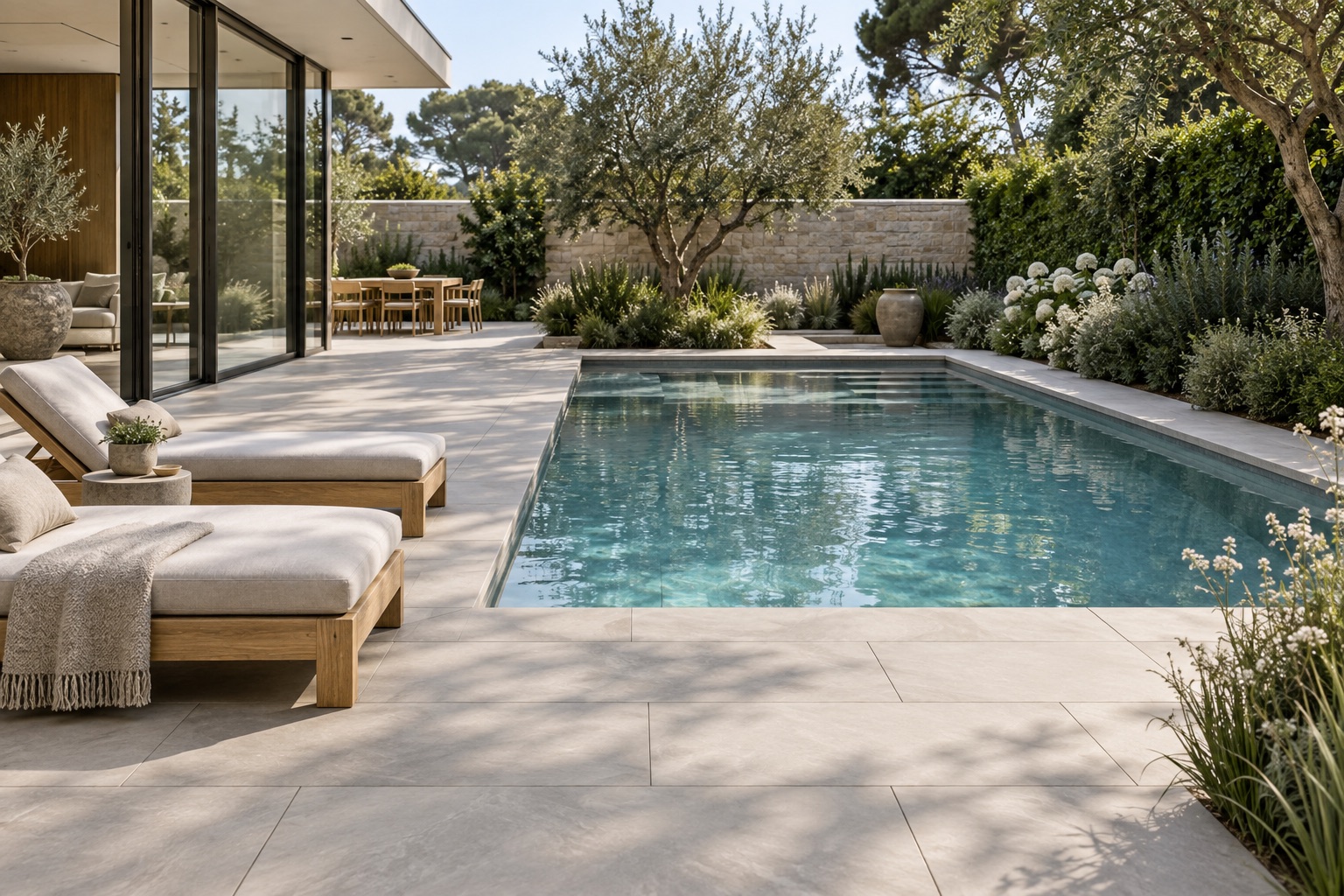
Slip is a system property
Slip resistance is not a single number printed on a box. It depends on the surface finish, the amount of water present, the slope, the sole of the foot or shoe, and how the surface is maintained. A finish that performs well dry can be slippery wet, and a finish that feels aggressive dry may be more comfortable and predictable in a wet pool area. The interaction of all these factors is what determines how a deck feels underfoot.
Because of this, the right question is not simply which product is slip-resistant, but how the selected finish, slope, drainage, and joint layout work together in wet conditions. Ask the supplier for the manufacturer's published information for the exact finish, and ask the designer how water will be kept off walking surfaces and directed away quickly.
Texture and barefoot comfort
Pool decks are used in bare feet, so texture matters in both directions. A finely textured surface feels smooth and is comfortable to walk on, but may offer less traction when wet. A deeply textured surface can feel rough, retain debris and need a different cleaning routine; texture alone does not establish traction performance. The goal is a middle ground that provides predictable traction without being abrasive.
Ask to feel samples wet and dry, not just dry. Ask how the texture will feel after it has been used and cleaned for a season. Some finishes soften slightly with wear; others hold their texture. The best test is an actual sample of the specific product and finish under conditions that resemble the pool area.
Heat and sun exposure
Pool decks are often in full sun, and surface temperature can make the difference between a comfortable deck and one that cannot be used barefoot at midday. Color, material, and finish all affect how much heat the surface absorbs and holds. Color is one factor to consider in sun exposure, but comfort depends on the selected material and conditions; compare samples rather than assuming a temperature.
Ask the designer how the deck will be shaded or used during the hottest hours and whether a lighter color would improve comfort. Consider that pool water and wet feet also cool the surface somewhat, but not uniformly. Where shade is limited, material and color choices should account for heat.
Chemical and water exposure
Pool water carries chemicals, and splash and overflow bring them onto the deck. Some surfaces are more tolerant of pool chemistry than others, and some finishes show water spots or mineral deposits more readily. Rinsing and cleaning help, but the product's care guidance determines what is safe to use.
Ask the manufacturer or supplier how the surface should be cleaned after exposure to pool water and which cleaners are safe. Ask the pool professional how splash and overflow are managed and whether the deck is designed to drain away from the pool and the surrounding area.
What to verify before installation
Before installation, confirm the product and finish are approved for pool decks and wet areas, confirm the slope and drainage design, and confirm the setting system and joint details. Ask how the finish was selected for wet traction and how it will be maintained. Ask for the manufacturer's documentation and keep it with the project record.
Assess heat and access separately
MSI discusses heat in relation to its own tested pavers and comparable colors. The Access Board separately explains why very rough surfaces can create difficulty for wheeled mobility aids. Do not turn a single texture or color preference into a claim that a deck is safe for everyone. Review samples, shade, footwear, maintenance and accessible circulation as separate decisions, and have the designer resolve conflicts before approving the finish.