article · Installation decisions
Tile and waterproofing: two different parts of a shower
Understand what protects the building behind tile, and what to ask before a wet-area assembly is covered.
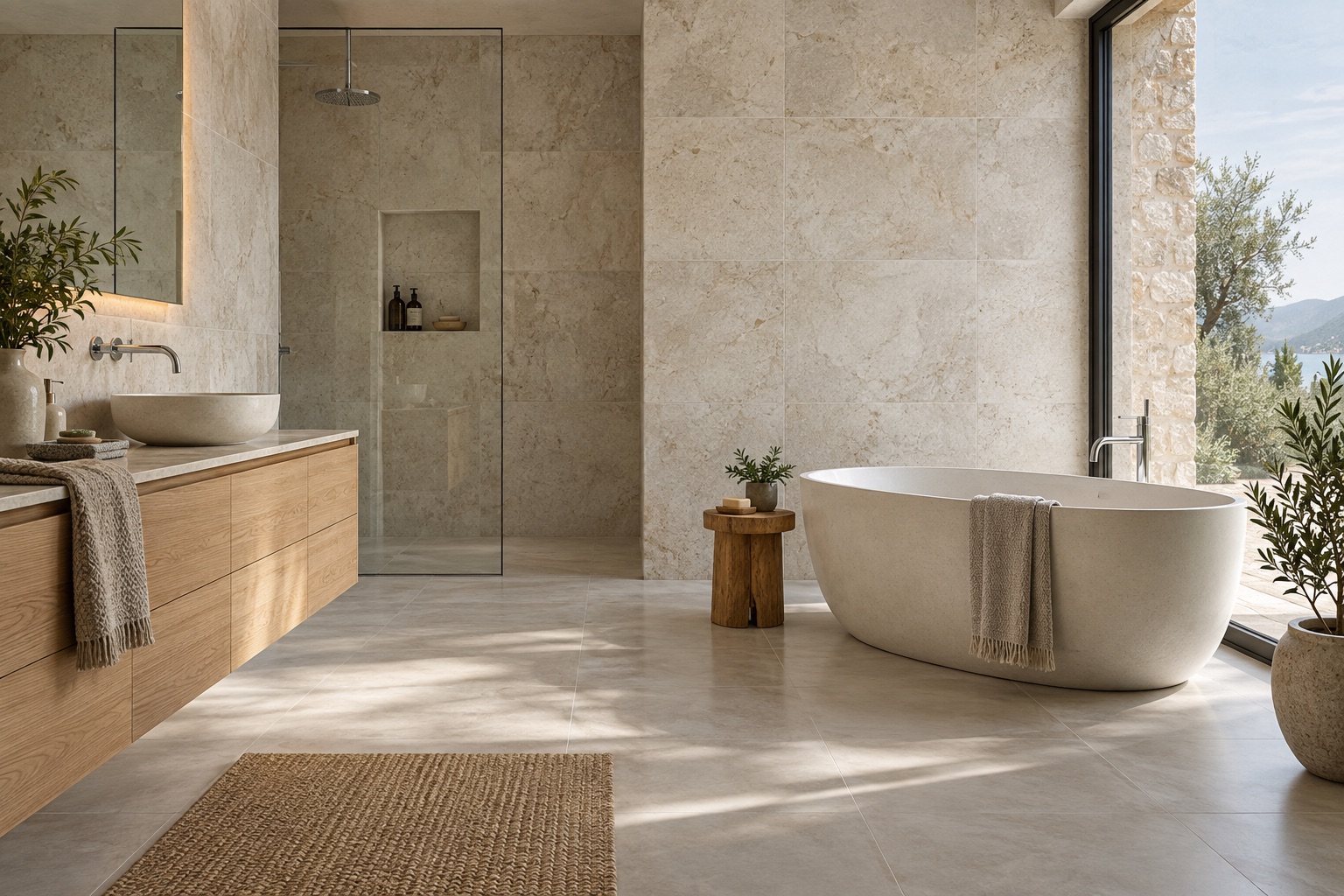
The finish is not the water-management system
Schluter explains that tile and grout are not inherently waterproof. A tiled shower therefore needs a compatible water-management assembly behind or beneath the decorative finish. This distinction matters when a quotation lists beautiful tile but says little about the substrate, membrane or drain connection. Ask the contractor to identify the complete proposed assembly, with its current instructions. A grout upgrade alone should not be treated as approval of the hidden waterproofing.
Identify the system boundaries
List the floor, walls, drain, corners, penetrations and doorway as parts of one wet-area plan. Ask how the chosen system addresses each connection and which trade owns it. A membrane product name without an installation detail does not settle those interfaces. Different systems can manage water differently, so do not combine portions of manufacturer details casually. Where mixed products are proposed, obtain the appropriate compatibility guidance instead of assuming that all waterproofing components are interchangeable.
Agree on verification before tiling
Ask what inspection or testing the applicable system requires, when it occurs and who records the result. For example, the KERDI product documentation describes a wait before testing its connections; that timing belongs to that specific assembly and should not be generalized. Set the project’s hold point from its actual instructions. Photograph accessible junctions and record the selected materials before the tile covers them. An attractive finished photograph cannot verify every concealed connection.
Keep changes visible
A different drain, relocated niche, added pipe penetration or revised doorway can change the detail. Put that change in front of the person responsible for the waterproofing before the finishing trade proceeds. Save the updated drawing and any written manufacturer answer. This is especially useful when several contractors work in sequence: the accepted waterproofing condition should travel with the handoff rather than exist only in a conversation that the next crew did not hear.
Choose the surface after the assembly is feasible
The selected tile still needs its own application and installation review, including finish, format, layout and setting materials. Large formats or intricate mosaics can change fabrication and layout decisions without replacing the water-management requirement. Close the selection only when the assembly and decorative plan fit together. The practical deliverable is a documented system, an agreed verification point and a visible record of changes, not a claim that any particular tile makes a shower waterproof.
Sources
- Why a tiled shower needs a waterproofing membrane Schluter Systems
- Water management in tiled showers Schluter Systems
- KERDI waterproofing membrane: application and testing guidance Schluter Systems