article · Trade coordination
Outdoor kitchen scope: separate the slab from the assembly
Coordinating outdoor kitchen assemblies: framing, support, countertop slabs, cutouts, cladding, and weather exposure.
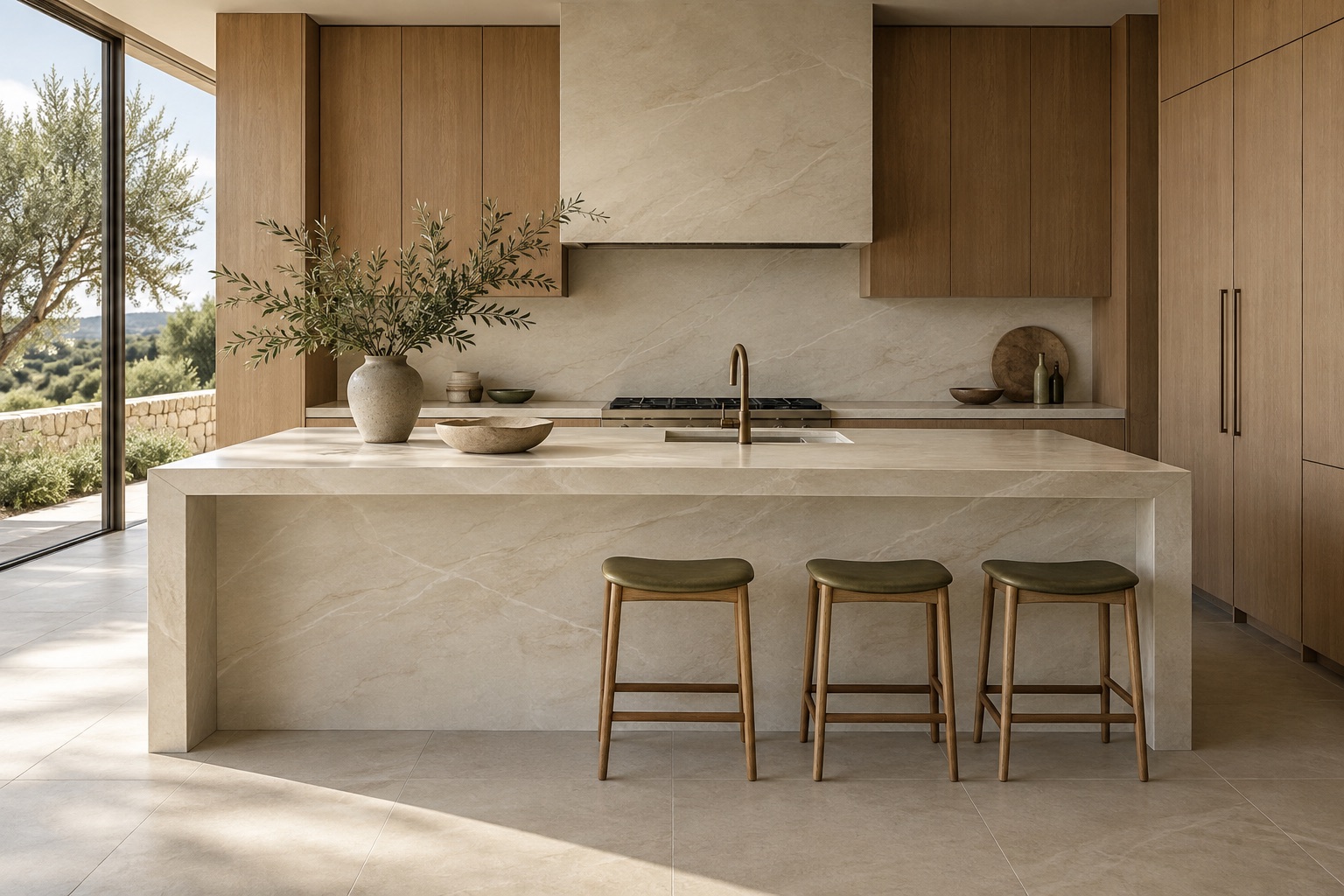
The countertop is one layer
An outdoor kitchen countertop sits on a structure that includes framing, a substrate, and often cladding. The slab's performance depends on how flat and rigid that structure is and how it handles weather and movement. Sintered stone slabs, natural stone, and other countertop materials all require support appropriate to their thickness and span.
Ask who builds the structure, who specifies the substrate flatness, and who approves the countertop support. The countertop fabricator and the cabinet builder must agree on dimensions and tolerances before either proceeds. Movement in the supporting structure can cause cracking or uneven joints; the design should account for the selected assembly.
Plan cutouts and appliances
Grills, side burners, sinks, refrigerators, and outlets all create cutouts and penetrations in the countertop. Each opening interrupts the slab and concentrates stress. Cutouts must be positioned with adequate edge distances and radii, per the manufacturer's guidance, and coordinated with the appliance dimensions. Propane, gas, and electrical connections need room and access.
Ask the fabricator how openings are laid out and reinforced, and ask the appliance supplier for the required clearances. Changing an appliance after the slab is fabricated is expensive. Finalize the equipment list before templating, and confirm that the layout leaves usable counter space.
Choose and detail cladding
Cabinet and island cladding in an outdoor kitchen faces weather, splash, and heat. Materials may include stone, porcelain, sintered slabs, or other exterior products. The cladding must be compatible with the framing, handle moisture, and allow for movement. Vertical surfaces near grills need particular attention to heat clearance.
Ask how the cladding is attached, how it drains or ventilates, and how corners and edges are finished. Ask how the cladding interacts with the countertop above and the base below. A cladding detail that traps water can damage the structure behind it.
Weather, heat, and movement
Outdoor kitchens experience sun, rain, freeze-thaw, and heat from cooking. Materials expand and contract, and structures move. Countertops need support and joints that accommodate this movement. Where a grill or fireplace is nearby, clearances and heat protection become safety issues.
Ask the manufacturer for the exterior and heat-related guidance for the specific product, and ask the designer how movement and clearances are detailed. Do not assume an interior countertop product is suitable outdoors or near heat. Exterior-rated products and specific approvals should be documented.
Sequence and protect the work
Outdoor kitchen work involves masonry, carpentry, countertop fabrication, plumbing, and electrical. Sequence matters: rough-ins before finishes, structure before template, countertop after framing is stable. Protect finished surfaces from other trades, and keep the site dry where possible. Final connections and testing should happen after the countertop is set.
Ask for a written sequence and hold points, including who inspects the substrate and support before the countertop is installed. An agreed hold point gives the team a chance to verify the support before accepting the slab installation.
Put appliance interfaces on the scope sheet
Cosentino’s Dekton care document includes precautions around heat sources and vulnerable edges even though the product is offered for outdoor kitchens. Bring the appliance model, countertop cutout and supporting structure into the same fabrication review. Assign responsibility for the final dimensions and approvals. The counter fabricator should not have to infer ventilation, appliance clearance or cabinet stability from a rendering supplied after the slab has been cut.