article · Trade coordination
Exterior surface coordination: assign the interfaces
Sequencing and interface control for exterior pavers and slabs: base, drainage, waterproofing, and adjacent trades.
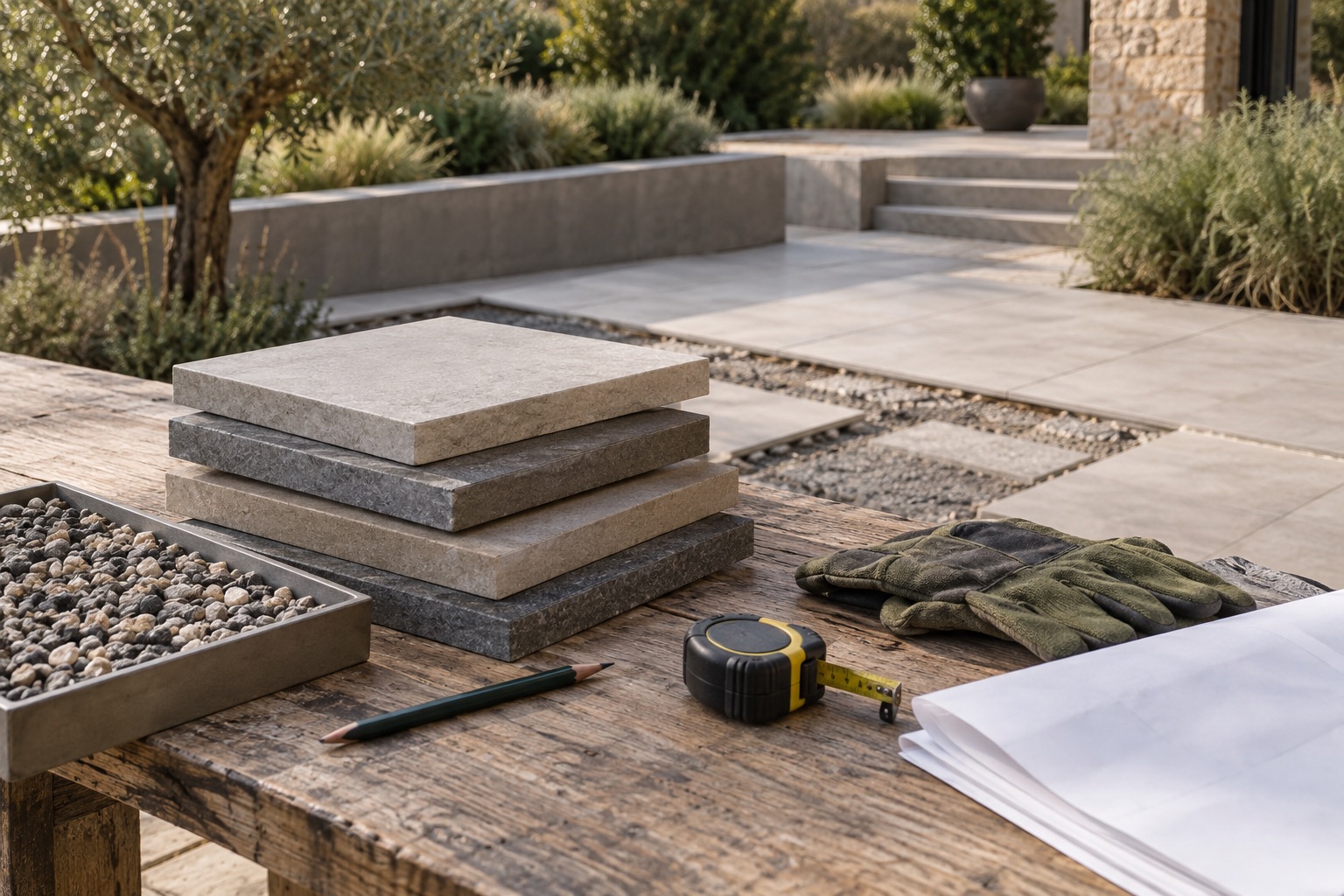
Sequence exterior work correctly
Exterior surfaces sit at the end of a sequence that starts with excavation and drainage. Base and buried utilities come first, then waterproofing or structural work where applicable, then edge restraint and setting, then jointing and cleanup. Reversing or overlapping these steps carelessly means reworking finished work. Publish the sequence and hold the trades to it.
Where exterior work meets interior work, coordinate the door thresholds and levels so that the interior floor and the exterior surface meet as designed. A level difference discovered after both surfaces are installed is expensive to correct. Verify the threshold detail before either surface is set.
Control the base and drainage interfaces
The base is the shared foundation of the exterior scope. The trade building it and the trade setting the surface should agree on grade, slope, compaction, and drainage before the surface is placed. Photograph the prepared base, and record the verification. If the base is later found to be deficient, the record shows what was actually built.
Drainage interfaces with plumbing, downspouts, and site grading. Confirm that each connection is made and that water has a defined path away from the structure. An exterior surface cannot compensate for a site that does not drain.
Protect waterproofing and structures
On decks, balconies, and terraces, exterior surfaces often sit above waterproofing or a structural slab. Protecting that layer is a shared responsibility. Pedestal systems, protection boards, and careful staging prevent damage. Any penetration or attachment must be detailed and sealed according to the waterproofing manufacturer's requirements.
Ask who inspects and approves the waterproofing before the surface covers it, and record that approval. Once covered, defects are difficult to find and costly to expose. A short inspection hold point is standard practice on good projects.
Coordinate adjacent trades
Exterior surfaces meet landscaping, irrigation, lighting, fencing, and sometimes pool equipment. Each interface needs a decision about who builds it and when. Irrigation and lighting rough-ins should be complete before the surface is installed where possible. Fence posts and retaining walls should be located and their foundations coordinated with the base.
Hold a brief coordination meeting before the surface work begins. Walk the site, confirm the sequence, and assign each interface. Documenting these decisions helps the next trade locate services without relying on guesses or disturbing finished work unnecessarily.
Weather and protection planning
Exterior installation depends on weather. Setting materials, adhesives, and joint fill have temperature and moisture limits. Plan around the forecast, protect freshly installed areas, and know when the surface can be walked on or loaded. A schedule that ignores weather invites defects and rework.
Protect adjacent finished surfaces from construction traffic, mortar, and debris. Cover or mask as needed, and include protection and final cleaning in the scope. A well-executed exterior scope ends with a clean, undamaged surface, not with the trades repairing each other's mess.
Name the owner of each interface
The MSI manual defines a product-specific installation, while EPA’s pavement guidance addresses a separate stormwater system. On a combined exterior project, neither document assigns your team’s responsibilities. Make those assignments explicit: excavation, drainage outlet, bedding, perimeter, setting and inspection. The useful deliverable is a shared drawing with named owners and review points. Any unresolved interface should be settled before it is covered by a later layer.
Sources
- Arterra porcelain pavers professional installation manual MSI
- Stormwater best management practice: permeable pavements US Environmental Protection Agency