article · Kitchen & bath surfaces
Compare countertop materials by the way you cook
A framework for comparing countertop surfaces for kitchens and baths, including porcelain, natural stone, sintered stone, and engineered options.
What a countertop must do
A countertop is a working surface. It must tolerate heat, cutting, spills, cleaning, and daily use while looking good. Different materials excel at different things, and no single material is best at all of them. The right choice depends on how the kitchen is used, how much maintenance the owner accepts, and the look the room requires.
Start by listing the demands: how much cooking happens, whether hot pans are set down directly, how often acidic foods and oils are present, and whether the surface will be scrubbed frequently. These answers point toward or away from specific materials and finishes more reliably than a style preference alone.
Compare the main families
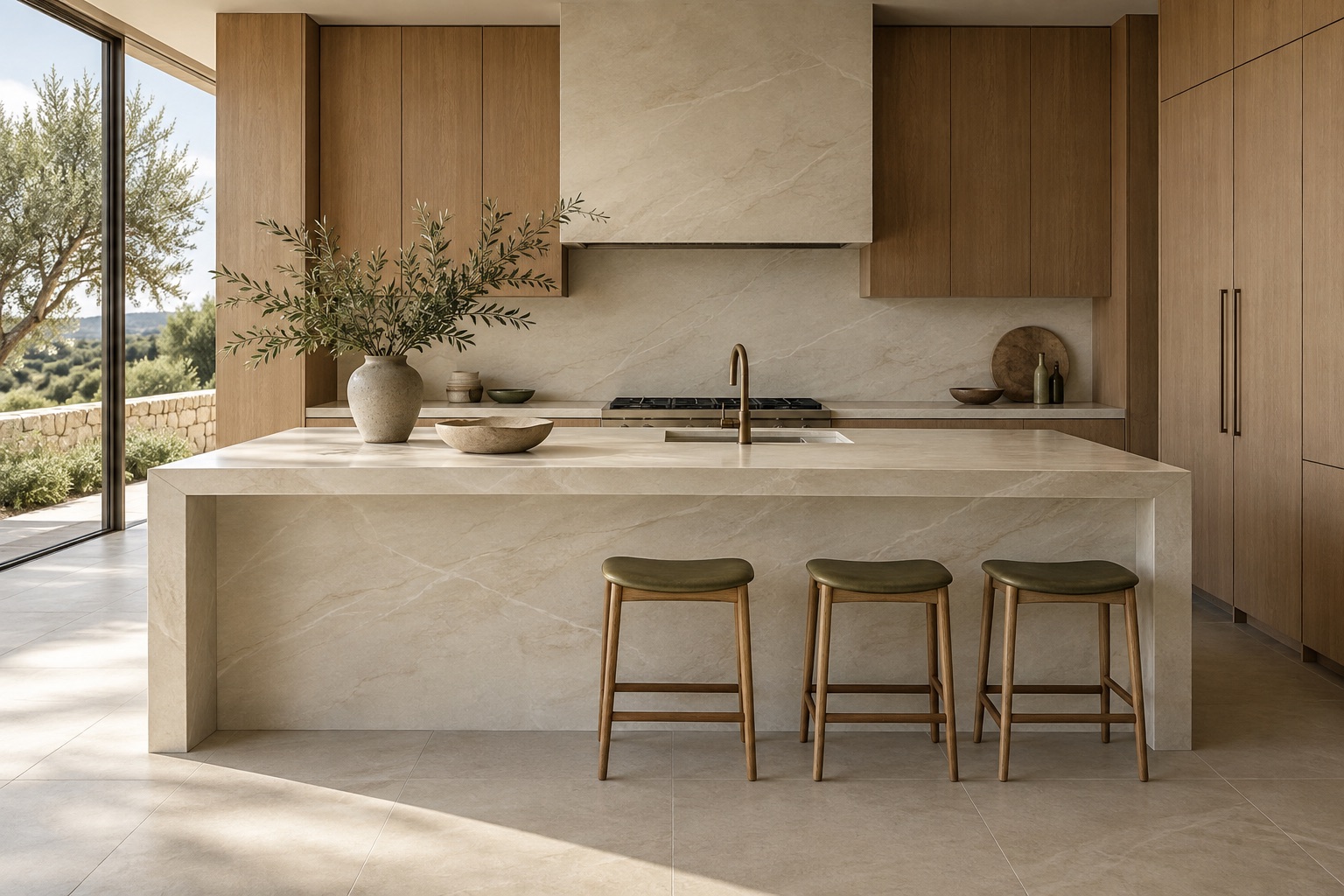
Porcelain slabs offer consistency, large formats, and resistance to water and staining, and they can emulate stone or concrete. Natural stone slabs bring unique character but vary in porosity and care needs. Engineered quartz and other products round out the field. Each family has internal variation.
The honest comparison is at the product level. Two products in the same family can differ in heat tolerance, staining, and required care. Ask for the datasheet and the care guide for each candidate rather than relying on the family name.
Heat, scratches, and everyday wear
Countertops face heat from pans and appliances, abrasion from dishes and cutting, and the occasional impact. Materials differ in how they respond and in what protection the manufacturer requires, such as trivets or cutting boards. Some surfaces can be refinished; others cannot. Ask what the manufacturer recommends for heat protection and cutting.
Ask how the surface handles the specific activities in the household. A busy kitchen with heavy cooking may warrant a different choice than a lightly used bath vanity. Ask how visible scratches and marks will be over time and whether they can be repaired.
Seams, edges, and cutouts
Countertops rarely come in a single piece for a whole kitchen. Seams, edge profiles, and cutouts for sinks and cooktops all affect appearance and performance. Seam placement should be planned to fall in less visible locations and to align with the design. Edge profiles range from simple to elaborate, and some are more prone to chipping. Cutouts need proper support and edge distance.
Ask the fabricator to show seam and edge options and to plan cutouts with the appliance dimensions in hand. Ask how the material is supported around openings and overhangs. A well-planned layout hides seams and reduces stress concentrations.
Care and long-term appearance
Ask what routine care each material requires and whether sealing is needed. Ask how the surface reacts to common kitchen substances such as oil, wine, citrus, and cleaners. Ask how the finish will age and whether it can be restored. For natural stone, ask for care specific to the stone type.
Consider also how a future repair would be handled. A chip or crack in a countertop is a significant event, and the ease of repair varies by material. Keeping the product name, finish, and fabricator record helps if service is needed later.
Read the heat precautions, not just the headline
Cambria and Cosentino publish care information for their own countertop products. Cosentino’s Silestone guidance recommends trivets despite describing the material as heat-resistant, while Dekton documentation includes precautions around direct heat sources and exposed edges. Those qualifications are part of the selection decision. Compare the actual product instructions against the household’s cooking habits, and include the fabricator’s support and cutout requirements before choosing from a small color sample.